Products
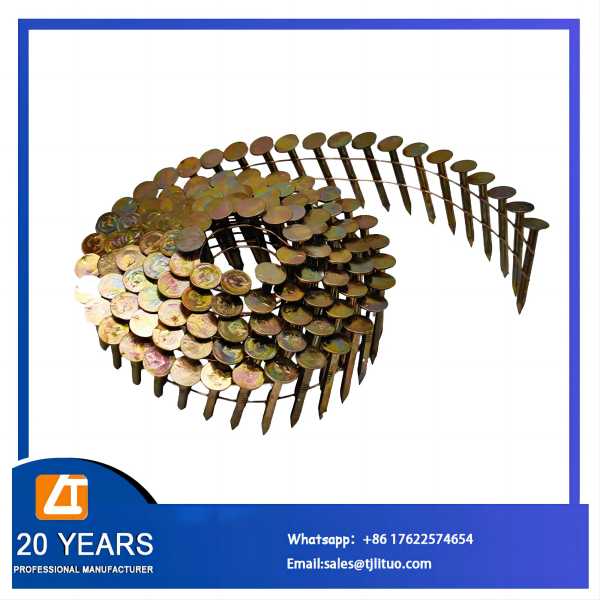
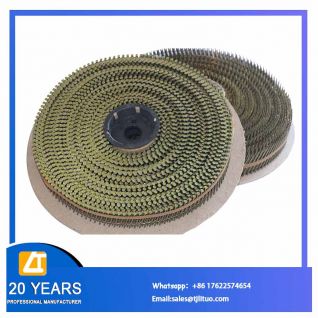
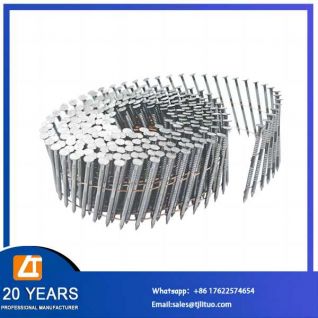
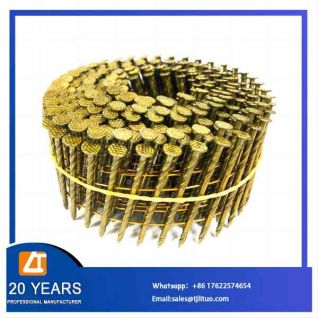
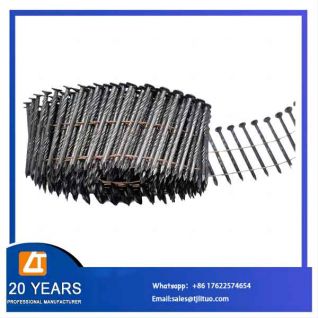
1-1/4 Coil Nails Smooth Galvanized Wire Coil Roofing Nails
Material: Q235 Carbon Steel, Stainless Steel
Diameter: 2.5–3.1 mm
Nail number: 120–350
Length: 19–100 mm
Collation type: wire
Collation angle: 14°, 15°, 16°
Head Type: Flat Head
Shank type: Smooth, Ring, Screw
Point: Diamond, Chisel, Blunt, Pointless, Clinch-point
Surface treatment: Bright, Electro Galvanized, Hot Dip Galvanized, Painted
Introduction
Coil roofing nails are fasteners specifically designed for securing asphalt shingles, roofing felt, and other roofing materials to the roof deck. They are characterized by their large, flat heads and short, sturdy shanks.They are collated (fixed) into rolls or strips and typically contain between 120 and 300 nails, which allows them to be used with a coil roofing nailer (a pneumatic or gas-powered nailer), significantly speeding up installation.Our company can also provide the coil nailers for customers.
1. Nail Head: A larger diameter (typically 3/8" to 7/16") provides a larger bearing surface. This helps prevent the nail from pulling out of the asphalt shingles and ensures the roofing material is securely fastened to the shingle.
2. Nail Shank: A smooth shank is typically used for standard applications. In areas with high winds, a ring shank or spiral shank is used. The ring/thread provides strong pullout resistance, preventing the nail from being dislodged due to wind lift or thermal expansion and contraction.
3. Nail Point: The sharp, diamond-shaped tip easily penetrates the shingle (usually oriented strand board or plywood).
4. Nail Fastening: The nails are held together with a plastic or wire loop. Plastic fastening is the most common and works well with modern nail guns. Wire fastening is less common but very durable.
5. Material: Made of hardened steel to prevent bending when struck. It is then galvanized or coated to prevent rust and corrosion, which is crucial for the long-term durability of the roof.